
Published August 25, 2026
Theology Certificate Programs: A Practical Guide for 2026

Yes, accredited theology certificate programs are widely available across the United States, and most working adults can complete one in 6 to 12 months by earning 12 to 18 credits. These programs suit ministry leaders, lay volunteers, and career changers who want serious theological training without a multi-year degree commitment, and in most cases, the credits transfer directly into a graduate degree later.
TL;DR:
- Most accredited theology certificates can typically be completed in 6 to 12 months by earning 12 to 18 credits, with many credits transferable to graduate programs.
- Accreditation by regional agencies and the Association of Theological Schools is essential, and transfer policies vary by institution and program, often requiring a minimum GPA and content alignment.
- Cost for certificates generally ranges between $3,000 and $6,000, with online formats like self-paced or cohort-based courses offering flexible timelines of 6 to 12 months.
- When choosing a program, prioritize accreditation, transferability of credits, format, and costs over reputation or anecdotal advice, and confirm details in writing with registrars.
- Findbibleschools simplifies comparison of over 213 accredited options based on cost, format, and transfer policies, streamlining the process for working adults seeking theological training.
Table of Contents
- What Are the Main Types of Theology Certificate Programs?
- How Do You Verify Accreditation and Credit Transfer?
- How Should You Choose Among Competing Programs?
- What Formats, Timelines, and Costs Should You Expect?
- How Do You Apply and Get Started?
- How Findbibleschools Helps You Compare Certificate Programs
- What Most Advice Gets Wrong About Theology Certificates
- Ready to Compare Accredited Theology Certificates?
- Sources
What Are the Main Types of Theology Certificate Programs?
Not every certificate teaches the same thing, and picking the wrong focus wastes time you don’t have. Biblical studies certificates concentrate on scripture itself, covering Old and New Testament survey courses, hermeneutics, and original-language basics. Theological studies certificates take a broader view, adding systematic theology, church history, and doctrine to the biblical foundation. Ministry leadership certificates lean practical, with coursework in pastoral care, preaching, and church administration, while specialization certificates target a narrower skill, such as biblical counseling or worship leadership.
Undergraduate certificates typically require no prior college coursework and serve as an entry point for beginners exploring theology studies for the first time. Graduate certificates, by contrast, generally require a bachelor’s degree for admission and carry graduate-level rigor and tuition. Lipscomb University’s online Theological Studies Certificate, for example, operates at the graduate level and can apply toward master’s programs, which makes it a common on-ramp for people testing the water before committing to an M.Div. or MA.
Certificates that stack into degrees tend to follow a predictable pattern:
- Biblical studies certificates often feed into a Master of Arts in Biblical Studies or similar MA track.
- Theological studies certificates commonly apply toward a Master of Theological Studies (MTS) or the academic portion of an M.Div.
- Ministry leadership certificates frequently transfer into professional M.Div. concentrations focused on pastoral practice.
- Specialization certificates (counseling, worship) usually count as electives rather than core requirements in a graduate program.
Working pastors often start with a ministry leadership certificate for immediate skills, while academically minded learners gravitate toward biblical or theological studies as a foundation for further study.
How Do You Verify Accreditation and Credit Transfer?
Accreditation is the single most important filter when comparing accredited theology programs, and it’s also the one corners get cut on most often. Two kinds matter here: regional accreditation, which covers the institution as a whole and is recognized broadly across U.S. higher education, and Association of Theological Schools (ATS) accreditation, which specifically evaluates seminary and divinity programs for theological rigor and ministry preparation. A school can hold one, both, or neither, and that distinction affects whether employers, denominations, and other schools will recognize your certificate.
Before enrolling, run through a short verification process:
- Search the school’s accreditation status directly on the ATS accreditation directory or the relevant regional accreditor’s site rather than trusting a marketing page.
- Pull the current academic catalog and look for an explicit transfer-credit or articulation policy, not just a vague mention.
- Call or email the registrar’s office and ask, in writing, whether your specific certificate applies to a specific degree program you’re considering.
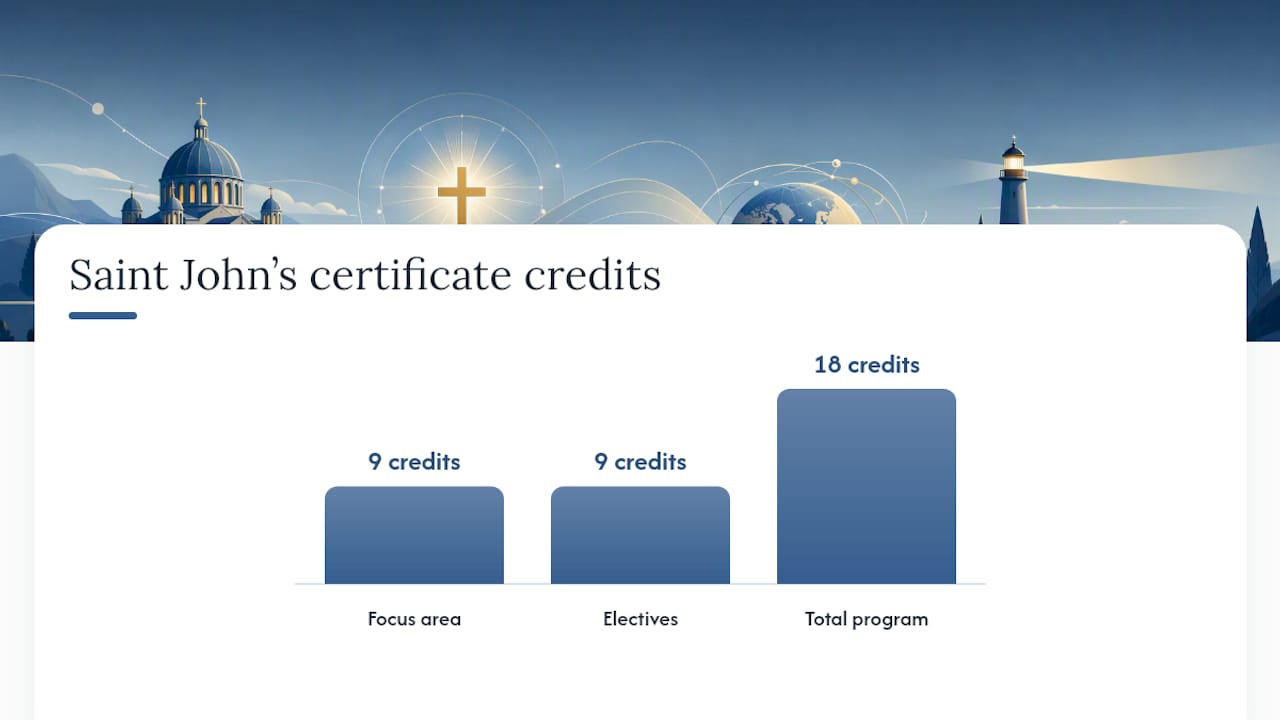
Transfer conditions vary, but most schools require a minimum grade (commonly a B or better), close alignment between course content, and formal admission to the receiving degree program. Saint John’s Certificate in Theology illustrates this well: it’s an 18-credit program with a 9-credit focus area and 9 credits of electives, and the school states plainly that those credits can move into a master’s program, but only pending admission and a minimum 3.0 GPA. That kind of conditional language is normal, not a red flag, but you need to read it before you enroll, not after.
Pro Tip: Get the transfer policy in writing from the registrar, not the admissions counselor. Admissions teams sell enrollment; registrars enforce the actual rules, and their answer is the one that will hold up two years from now.
How Should You Choose Among Competing Programs?
Comparing five program pages side by side gets confusing fast, so work through this priority order instead of jumping straight to cost:
- Accreditation first. Confirm ATS or regional status before you look at anything else, since a great curriculum from an unaccredited school won’t transfer or carry weight professionally.
- Transferability second. Ask whether credits apply toward a specific degree you might pursue, not just “our degree programs” in general.
- Format and schedule third. Match the delivery mode to your actual life, not your ideal life. If you travel for work, a rigid cohort schedule will wear you down.
- Cost and aid fourth. Compare per-credit tuition, not just advertised totals, since credit loads vary by program.
- Theological fit fifth. Denominational tone and doctrinal emphasis matter for ministry credibility, especially if you plan to serve in a specific tradition.
- Faculty and outcomes last. Check whether instructors hold terminal degrees in their teaching area and whether the program publishes any completion or placement information.
When you talk to admissions, ask these questions directly:
- Which specific courses will you accept in transfer, and how many credits total?
- What are the upcoming start dates, and how often do new cohorts begin?
- What technology or software does the program require?
- Is the refund policy prorated, and by what schedule?
- What financial aid, payment plans, or employer partnerships are available?
- Who makes up the typical cohort, in age and vocational background?
Pro Tip: If admissions can’t give you a straight answer on transfer credit within one email exchange, treat that as a warning sign. A program confident in its accreditation and articulation agreements will document the answer immediately.
Red flags worth walking away from: no accreditation listed anywhere on the site, vague answers about faculty credentials, and pressure to enroll before you’ve seen a written cost breakdown.
What Formats, Timelines, and Costs Should You Expect?
Delivery formats for online theology courses fall into a few recognizable patterns. Self-paced online programs let you move through modules on your own clock, cohort-based online programs run on a fixed calendar with classmates, and evening or hybrid formats combine occasional campus time with online coursework, which suits people who want some in-person connection without relocating.
Timelines cluster around two models. Corban University’s online Theological Studies Certificate runs 18 credits across six 8-week courses, typically finishing in 6 to 12 months depending on course load. Palmer Theological Seminary’s graduate certificate takes a leaner approach: 12 credits across four courses in 7-week terms, completed in about nine months.
Costs vary more than most people expect. Corban lists its certificate at roughly $500 total on its 2026 to 2027 program page, an unusually low figure for an accredited option, while Palmer’s graduate certificate runs closer to $480 per credit, putting a 12-credit certificate near $5,760. Graduate certificates generally land somewhere between $3,000 and $6,000 total, depending on the per-credit rate and how many credits the program requires.
Financial aid availability differs by school and by whether the certificate qualifies for federal aid at all, so ask directly rather than assuming. Payment plans are common even where federal aid isn’t an option.
How Do You Apply and Get Started?
Once you’ve picked a program, enrollment moves faster than most people expect. Work through it in order:
- Clarify your goal. Decide whether you want a standalone credential or a stepping stone into a degree, since that shapes which certificate you choose.
- Verify accreditation and transferability using the steps above, before you fall in love with a specific program.
- Request the catalog or talk to advising to confirm course sequencing and any prerequisites.
- Confirm start dates and application deadlines, especially for rolling-admission programs with multiple entry points per year.
- Gather transcripts and references early, since transcript requests from previous schools often take longer than applicants expect.
- Submit your application and enroll, then set up any required learning platform access before your first course opens.
Busy learners can look for rolling starts, part-time course loads, and credit for prior learning, which some schools grant for previous ministry training or coursework. After acceptance, expect a short orientation, a manageable first-term course load, and a named advisor you can contact directly with questions.
How Findbibleschools Helps You Compare Certificate Programs
Findbibleschools maintains a directory connecting students with more than 213 accredited theological institutions across the United States, with curated details on tuition, accreditation status, and campus culture for each one. Instead of digging through dozens of individual admissions pages, you can filter by program type, compare cost side by side, and check accreditation notes in one place.

Browse full theology programs and degree options to see how certificates stack against associate and bachelor’s tracks, or look at detailed profiles like Talbot School of Theology at Biola University to see the level of program detail available before you ever contact a school directly.
What Most Advice Gets Wrong About Theology Certificates
Most guidance on theology certificate programs treats accreditation as a checkbox and cost as the deciding factor. Both instincts undersell what actually matters. The real risk isn’t picking an unaccredited program, since those are easy to spot once you know to look. It’s picking an accredited program whose credits won’t transfer the way you assume they will, because the catalog language buried the GPA condition or the articulation agreement only covers one specific degree track.
The conventional advice to “shop by price” also misses the point for working adults. A $500 certificate that dead-ends academically costs you more in wasted time than a $5,000 graduate certificate that stacks cleanly into an M.Div. Time, not tuition, is the scarcer resource for most ministry professionals juggling a job and a calling.
What should come first is a blunt conversation with a registrar about transfer conditions, not a glossy admissions call. Programs that answer that question in writing, without hedging, are the ones worth your six months.
— Grant
Ready to Compare Accredited Theology Certificates?
Findbibleschools gives you a faster path than sorting through dozens of seminary websites one by one. You can filter accredited certificate programs by cost, format, and denominational tradition, then compare tuition and transfer notes side by side before reaching out to any school.
If you already have a state in mind, start with a page like Bible colleges in Tennessee to see accredited options near you, or explore a specific seminary profile such as Trinity Evangelical Divinity School to review its certificate offerings, tuition, and accreditation details directly. Either way, you’ll have the information you need to request more details and start your application with confidence.
Sources
- Theological Studies Certificate | Corban University
- Certificate in Theological Studies | Online | Palmer Theological Seminary
- Theological Studies Certificate (Online) | Lipscomb University
- Certificate in Theology | School of Theology and Seminary