Published September 6, 2026
U.S. Pentecostal Bible Colleges: 7 Accredited Picks That Fit Your Calling
Seven institutions consistently anchor any serious search for Pentecostal Bible colleges: Assemblies of God Theological Seminary, Oral Roberts University’s Graduate School of Theology and Ministry, Regent University School of Divinity, Pentecostal Theological Seminary, Lee University, Southeastern University, and Urshan University. Each combines Spirit-empowered formation with accredited coursework, though they differ sharply in denominational ties, format, and cost. The profiles below break down what each school does best, followed by a practical checklist for narrowing your own shortlist.
TL;DR:
- Verify that Pentecostal colleges emphasize Spirit baptism, spiritual gifts, and experiential worship as central to their curriculum, unlike general Christian schools.
- Confirm that schools are accredited by recognized bodies like the Association of Theological Schools or regional agencies before considering costs or campus culture.
- Ensure denominational affiliation aligns with your doctrinal beliefs, especially regarding Trinitarian or Oneness Pentecostal views, to avoid future conflicts.
- Ask for placement, graduation, and doctrinal data in writing to evaluate a school’s effectiveness and compatibility with your ministry goals.
- Choose between online, hybrid, or residential formats based on your schedule, with accreditation status and clear denominational ties guiding your decision.
Table of Contents
- What Are Pentecostal Bible Colleges, and Which Ones Stand Out?
- How Do Pentecostal Colleges Differ From Other Christian Schools?
- What Should You Ask Before Choosing a School?
- What Degrees and Accreditation Should You Look For?
- Why Trust This Shortlist of Pentecostal Seminaries?
- What Prospective Students Get Wrong About This Search
- Find Your Fit Among Accredited Bible Colleges
- Sources
What Are Pentecostal Bible Colleges, and Which Ones Stand Out?
Pentecostal Bible colleges are theological institutions that train students for ministry while centering the doctrine of Spirit baptism, spiritual gifts, and experiential worship as core to the curriculum, not just campus culture. That distinguishes them from general Christian ministry schools, which may teach about Pentecostal theology without organizing academic life around it.
The seven schools above turn up again and again in comparisons of Pentecostal seminaries because they represent the range of what “Pentecostal” now means in American theological education: denominationally governed schools tied directly to the Assemblies of God, university-based divinity programs with charismatic roots, and independent institutions built by ministry movements rather than denominational boards. Each profile below follows the same format, so you can compare apples to apples rather than sorting through marketing language school by school.
- Best for: the ministry focus around which each school is built
- Programs offered: the degree types most relevant to Pentecostal or charismatic ministry
- Accreditation status: what body accredits the school, so you can verify it independently
- Format: residential, hybrid, or online delivery
- Typical tuition shape: private tuition with the general scholarship or aid picture, not a fixed dollar figure
Assemblies of God Theological Seminary is best for students planning to pursue ordination within the Assemblies of God denomination specifically. It offers the MDiv, MA in various ministry concentrations, and a Doctor of Ministry, accredited through the Association of Theological Schools. Formats include residential and online tracks. Its standout feature is direct alignment with Assemblies of God ordination requirements, which shortens the path from graduation to credentialing for students already committed to that denomination.
Oral Roberts University’s Graduate School of Theology and Ministry suits students who want charismatic theology paired with a large, accredited university’s resources. Degree options span the MA in Practical Theology, MDiv, and Doctor of Ministry, with regional accreditation through the Higher Learning Commission alongside programmatic accreditation. ORU offers residential, online, and hybrid formats. Its healing-ministry emphasis and global missions infrastructure set it apart from smaller, single-purpose seminaries.
Regent University School of Divinity fits students who want charismatic theological training inside a broader university system with strong online infrastructure. Programs include the MDiv, MA in practical theology, and Doctor of Ministry, accredited by the Association of Theological Schools and SACSCOC. Regent runs some of the most developed online delivery in this category, making it a strong option for working students who cannot relocate.
Pentecostal Theological Seminary targets students connected to the Church of God (Cleveland, Tennessee) or similar Holiness Pentecostal traditions. It offers the MDiv, MA, and Doctor of Ministry, accredited by the Association of Theological Schools. Formats are primarily residential with some hybrid coursework. Its close relationship with denominational leadership gives students direct mentorship pathways into pastoral placement.
Lee University works well for undergraduates who want a Pentecostal-affiliated liberal arts foundation before seminary. It offers the BA in Christian ministry, biblical studies, and related fields, plus graduate theology programs through its affiliated seminary partnerships. Lee holds SACSCOC accreditation. Its residential campus culture, tied to the Church of God, gives students four years of spiritual formation before graduate ministry study.
Southeastern University suits students seeking an Assemblies of God-affiliated undergraduate and graduate experience with broader career flexibility built in. Programs range from the BA in Christian ministry to the MA in practical theology and MDiv, accredited by SACSCOC. Formats include residential, online, and hybrid. Southeastern’s dual emphasis on ministry preparation and marketplace vocations makes it a fit for students unsure whether they will pursue full time pastoral work.
Urshan University is best for students in Apostolic or Oneness Pentecostal traditions specifically, a niche the other six schools do not directly serve. It offers the BA in various ministry tracks and graduate certificates, accredited through the Association for Biblical Higher Education. Formats are primarily residential. Its standout feature is doctrinal alignment with the United Pentecostal Church International, which matters enormously if your calling is tied to that specific fellowship.
How Do Pentecostal Colleges Differ From Other Christian Schools?
The defining line runs through doctrine, not just campus atmosphere. Pentecostal and charismatic institutions build coursework around Spirit baptism as a distinct experience from conversion, the operation of spiritual gifts like prophecy and healing in the present day, and worship practices that expect visible, participatory expression. General Christian ministry schools may cover these topics academically without requiring students to practice or affirm them personally.
That doctrinal commitment shows up practically in a few ways:
- Chapel and worship services often include extended prayer, prophetic ministry, and altar response, not just structured liturgy.
- Field ministry requirements frequently include documented experience in healing prayer or spiritual gift exercise, not only preaching or teaching hours.
- Denominationally tied schools (Assemblies of God Theological Seminary, Pentecostal Theological Seminary, Urshan University) require doctrinal affirmation tied to a specific fellowship, while independent or university-based programs (Oral Roberts, Regent, Southeastern) allow broader charismatic latitude.
Pro Tip: If you’re unsure whether a school’s culture matches your expectations, ask admissions for a recorded chapel service. Worship style tells you more about daily campus life than any brochure.
Within the Pentecostal and charismatic world itself, there’s real variation. Oneness Pentecostal schools like Urshan University hold different Trinitarian views than Trinitarian Pentecostal schools like the Assemblies of God seminary, a distinction that matters far more than most prospective students realize going in.
What Should You Ask Before Choosing a School?
Run every candidate school through the same evaluation checklist before you compare price tags or campus photos.
- Accreditation. Confirm the accrediting body directly on the accreditor’s own site rather than trusting a claim on the school’s homepage.
- Program outcomes. Ask what percentage of graduates enter full-time ministry roles within a year, and whether the school tracks that data at all.
- Faculty credentials. Check whether core theology faculty hold terminal degrees (PhD or DMin) from accredited institutions, not honorary credentials.
- Worship life. Visit a chapel service if possible, since this reveals more about fit than any admissions pitch.
- Ministry placement. Ask whether the school has formal partnerships with churches or denominational bodies for internships and first calls.
- Credit transferability. Confirm in writing whether credits will transfer to other accredited seminaries if your plans change.
- Cost and aid. Request a full breakdown of tuition, fees, and average aid packages, not just the sticker price.
Group your questions by department when you visit or call: admissions (application deadlines, acceptance rates, denominational requirements), academic program (course sequencing, faculty ratios, thesis or capstone expectations), student life (housing, spiritual formation requirements, married-student accommodations), and finance (scholarship stacking rules, work-study availability, loan default rates).
Pro Tip: Ask for the name and denomination of three recent graduates now serving in ministry. A school confident in its outcomes will connect you.
Watch for red flags: accreditation claims you cannot independently verify, no published course catalog available before you apply, or admissions staff who give vague, unsourced placement statistics instead of real numbers.
What Degrees and Accreditation Should You Look For?
Degree choice depends heavily on where you’re headed. An AA or BA in biblical studies or ministry works as an undergraduate foundation, often paired with general education requirements. An MA in practical theology or a related concentration deepens ministry-specific training without the full academic weight of an MDiv. The Master of Divinity (MDiv) is the standard credential most denominations require for ordination and typically runs 72 to 90 credit hours. A Doctor of Ministry (DMin) is a practitioner-focused doctorate for those already in ministry who want advanced training without pursuing an academic PhD.
Accreditation comes in two layers worth checking separately:
- Regional or national institutional accreditors (SACSCOC, the Higher Learning Commission) confirm the school itself meets baseline academic standards.
- Specialized theological accreditors, chiefly the Association of Theological Schools, confirm the seminary-level program specifically meets ministry-training standards.
Verify both directly on the accreditor’s website, never solely through the school’s own claims. Format matters too: residential programs generally offer denser mentorship and spiritual formation, while online or hybrid tracks, increasingly common even at established seminaries like Gordon-Conwell, fit working students but may require supplemental in-person requirements for ordination in some denominations.
Why Trust This Shortlist of Pentecostal Seminaries?
Find Bible Schools tracks more than 213 accredited theological institutions nationwide, with curated data on campus culture, program types, and cost. The schools featured here were selected using three filters: publicly verifiable accreditation, direct relevance to Pentecostal or charismatic ministry formation, and data specific enough to source rather than repeat from marketing copy.
Faith-based higher education has drawn growing national attention, reflected in the convening in 2026 of sector leaders by the ACE Commission on Faith-Based Colleges and Universities to discuss its role. That visibility raises the stakes for accurate, comparable school information.
Some state pages, like Washington’s listing, show zero accredited Bible colleges, a reminder that coverage varies by region and that verifying availability matters as much as verifying quality.
What Prospective Students Get Wrong About This Search
Most guides to Pentecostal seminaries treat accreditation as a checkbox and worship culture as an afterthought. That ordering is backwards. Accreditation confirms a school meets a floor, not that it fits your calling. Worship style, denominational governance, and campus formation practices determine whether you’ll thrive there for three or four years, and research on faith-based colleges backs up treating cultural fit as a real evaluation axis, not a soft consideration you settle after the paperwork.
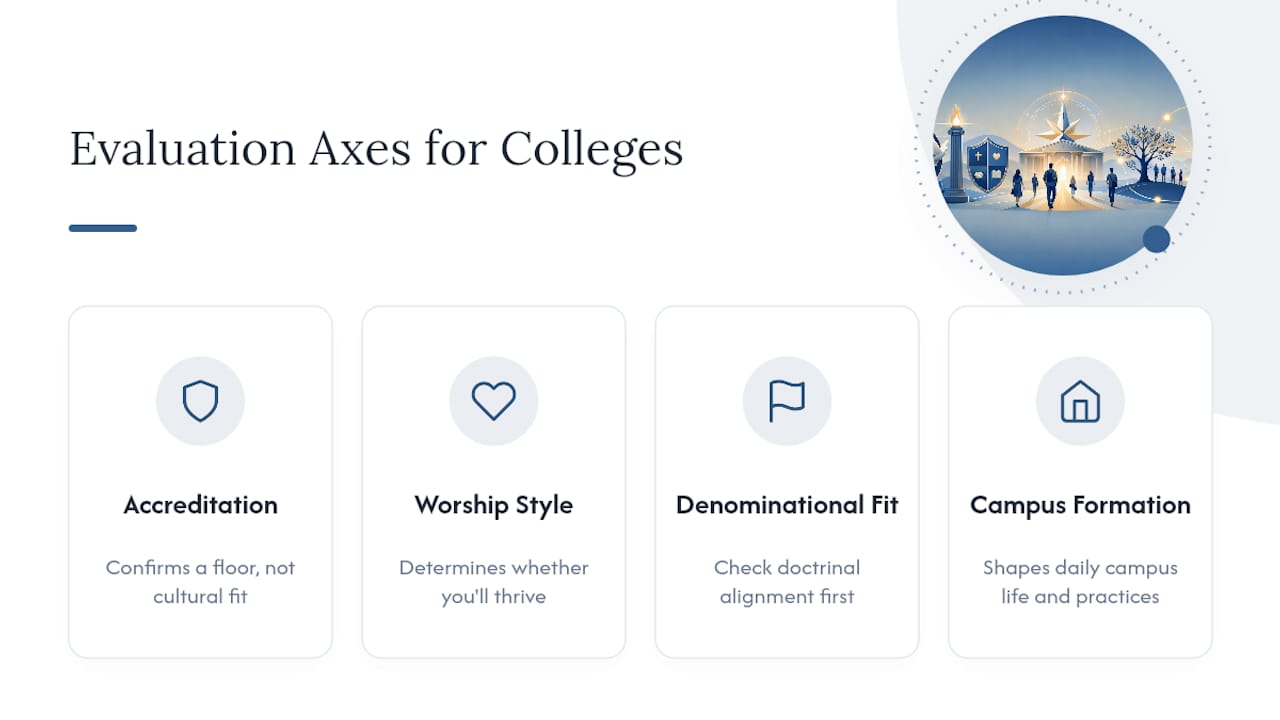
The other mistake is assuming “Pentecostal” is one thing. A Oneness Pentecostal student who enrolls at a Trinitarian-affiliated seminary without checking doctrinal alignment first is setting up friction that no amount of academic quality will fix. Ask the doctrinal question before you ask about tuition.
If you take one thing from this comparison, take this: request placement data and denominational alignment in writing before you apply anywhere. Schools that can produce both quickly are usually the ones worth your deposit.
— Grant
Find Your Fit Among Accredited Bible Colleges
Findbibleschools gets you past the guesswork of comparing seven schools’ websites by hand. Instead of piecing together accreditation status, tuition ranges, and denominational ties from scattered admissions pages, you can search a directory built specifically to compare Bible colleges and seminaries side by side.
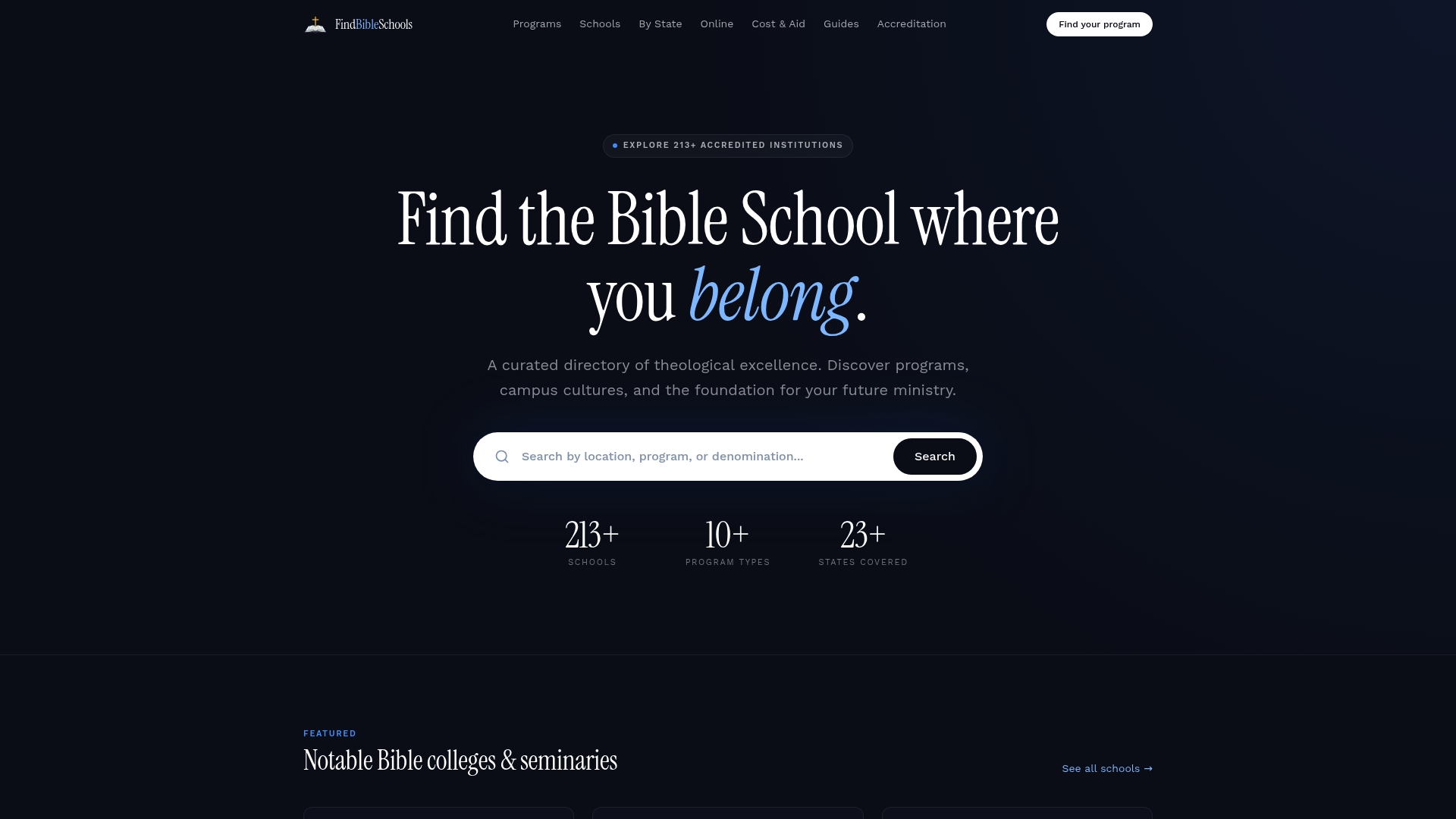
Findbibleschools currently indexes more than 213 accredited theological institutions across the country, with dedicated pages for individual schools and every state. Start by browsing Bible colleges by state to see what’s available where you live or where you’re willing to relocate, or check a specific option like Bible colleges in Tennessee if a Southern residential program fits your plans. From there, you can compare programs, note accreditation status, and reach out directly to schools that match your ministry calling. Search by state, compare degree formats, and request information from your shortlist today.
Sources
- The ACE Commission on Faith-Based Colleges and Universities
- Gordon-Conwell Theological Seminary - Home